产品中心
ホーム > 製品 > High-temperature-resistant Hot Air Circulating Fan > External Constant-Load Centrifugal High-Temperature (250 ℃) Fan

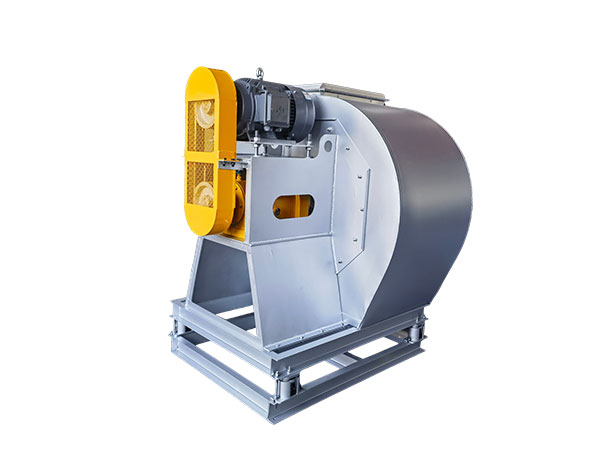
External Constant-Load Centrifugal High-Temperature (250 ℃) Fan

External Constant-Load Centrifugal High-Temperature (250 ℃) Fan

    External Constant-Load Centrifugal High-Temperature (250 ℃) Fan

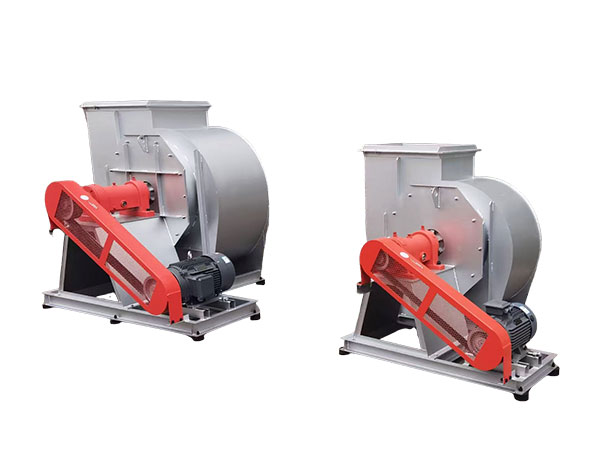
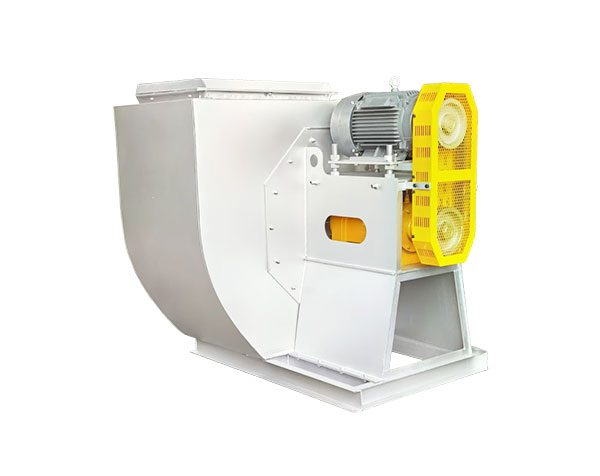
    External Constant-Load Centrifugal Fan is designed for demanding industrial applications requiring stable airflow and reliable operation. The High-Temperature Fan supports hot-air circulation and air conveying in thermal environments. Its centrifugal structure provides consistent air movement, making it suitable for ovens, drying equipment, coating lines, heat treatment systems, and industrial process equipment.
  • 共有:
  • 連絡する オンライン引合
  • 電子メール:Cecilia@shangyangfengji.com
    電子メール:Lily@shangyangfengji.com

Introduction to Fan Features

This fan is designed for constant-load operation. The impeller is equipped with S-type blades and a double-layer reinforcing ribs, which ensures low vibration during operation, high impeller strength, and excellent resistance to deformation. Under prolonged full-load operation, both airflow rate and air pressure remain stable with no degradation, making it ideally suited for constant-load working conditions. The fan can work continuously for 24 hours at a constant airflow rate and static pressure. Even under fluctuating duct resistance, the suction force stays consistent, preventing insufficient suction at distant workstations. The fan adopts a separated belt drive structure, which physically isolates the motor from high-temperature airflow to realize balanced load distribution, preventing motor overload or burnout. It is suitable for long production lines in dust collection, drying, and coating applications. The fan has a double-shell fully insulated housing as its core advantage. The housing is a double-layer steel plate enclosure, with a sandwich layer filled with high-density rock wool or alumina silicate for insulation. This material has a low thermal conductivity, significantly minimizing heat exchange between the interior and exterior. When conveying high-temperature flue gas or hot air, it minimizes temperature drop in the ductwork, ensure uniform temperature distribution in kilns and drying lines, reduce heating energy consumption, keep the outer shell cool to the touch, and reduce the risk of scald hazards in workshops. It also minimizes condensation and dripping from the outer shell, preventing corrosion of the fan and ductwork.


Introduction to Fan Parameters

This fan can be designed with an airflow rate of 500 m³/h to 200,000 m³/h and a maximum designed air pressure of 2,500 Pa. It can be customized as a high-temperature-resistant model based on the operating conditions. Depending on the specific operating temperature, different heat-resistant materials can be selected. The insulation thickness options include 100 mm, 150 mm and 200 mm, which can be adjusted upon customer request. Its design temperature resistance ranges from 250 ℃ to 1,000 ℃.


Applicable Industries and Scenarios of the Fan

I. Applicable Industries

Coating: spray painting and baking lines for furniture / automobile / hardware products; wood: drying kilns for boards and timber; building materials: drying of ceramic tiles, plaster boards and stone; new energy: drying and sintering of lithium battery and photovoltaic materials; chemical and plastics: rubber vulcanization, raw material drying and curing; heat treatment: tempering of hardware parts, dehydration and drying of electroplated workpieces

II. Application Scenarios

Internal hot air recirculation for high-temperature ovens, tunnel drying furnaces, curing furnaces and enclosed drying booths; capable of constant temperature maintenance and 24-hour continuous fixed-load circulating air supply.


Packaging and Shipping Method

Export Packaging Instructions

1. Packaging Type: Small-sized fans are packed in thickened export cartons;The medium and large-sized fans are packed in ISPM 15 fumigated solid wooden cases / wooden frames, compatible with sea freight containers.

2. Internal Protection: The entire unit is wrapped with anti-rust film and desiccant; the impeller and motor are individually cushioned with foam to protect against moisture, salt fog, and physical impact.

3. Securing: The package is fastened with steel straps, and the fan is secured with positioning blocks inside the crate to prevent movement or deformation during long-distance transportation.

4. Labeling & Marking Standards: The outer surface of the crate is printed with English shipping marks, and clearly indicated with model number, net weight, and handling symbols such as "Keep Dry", "Fragile" and "This Side Up / Sling Here".

5. Attached Documents: Bilingual (Chinese and English) installation manual and certificate of conformity delivered together with the package.


After-Sales Service and Maintenance

Warranty Period: 

1. A 12-month international warranty is provided for the entire fan, excluding vulnerable parts;

2. Online Technical Support: 24/7 online support from English-speaking engineers for remote guidance on troubleshooting, fan commissioning, and routine maintenance;

3. Maintenance Manual: An English maintenance manual is included with the shipment, covering procedures for periodic cleaning, bearing lubrication, and impeller inspection;

4. Spare Parts Supply: Original spare parts are available for bulk export shipment, minimizing the downtime for overseas equipment;


5. Troubleshooting Solutions: Standardized repair guidelines are provided, and on-site engineer services are also available (with travel expenses charged as needed);

6. Key Points for Regular Maintenance: Regularly clean dust from the impeller, check belt tension, inspect insulation layer seals, replenish lubricating oil, and monitor motor temperature to extend the fan's service life.


External Constant-Load Centrifugal High-Temperature (250 ℃) Fan

When I work with industrial heating and air circulation systems, I always start with the working condition rather than the product name. A fan may look simple from the outside, but once it is asked to move hot air continuously, the design becomes much more important. Air temperature, airflow, pressure, running time, duct resistance, motor arrangement and installation space all affect the final result.

Our External Constant-Load Centrifugal High-Temperature (250 ℃) Fan is designed for industrial applications that require stable hot-air movement under high-temperature conditions. It is suitable for hot-air circulation, air conveying and thermal process systems where the operating temperature can reach approximately 250 ℃ for the specified configuration.

I see this type of fan as a working part of the complete process, not an isolated machine. Whether it is installed on an industrial oven, drying line, coating production line or heat treatment system, the fan has to work together with heaters, ducts, chambers, dampers and other equipment.

At Zhejiang Shangyang Industrial Fan Co., Ltd., we manufacture standard and non-standard industrial fans for different process conditions. Our sales company is located in Shanghai, China, while our manufacturing facility is located at No. 6-8, Bifa Road, Xinbi Subdistrict, Jinyun County, Lishui City, Zhejiang Province. Our technical design, manufacturing and sales teams have around 20 years of industry experience.


1. What Is an External Constant-Load Centrifugal High-Temperature Fan?

The name tells us several things about the product.

External refers to the external arrangement used in the fan system, which can help separate important drive components from the hottest process airflow depending on the selected configuration.

Constant-load describes an operating concept in which the fan is selected and configured for a stable process duty. In real projects, I do not treat “constant load” as a promise that every system will have exactly the same motor load. The actual load depends on airflow, pressure, speed, gas density and system resistance. The correct approach is to match the fan to the customer's real operating point.

Centrifugal means that the fan uses a rotating impeller to move air outward and convert part of the air velocity into pressure. This makes Centrifugal Fans useful when air needs to travel through ducts or equipment with noticeable resistance.

High-temperature (250 ℃) indicates that the specified configuration is intended for high-temperature air applications up to approximately 250 ℃. This does not mean that every component or every installation condition should automatically be operated at 250 ℃. Before production, I always recommend confirming the actual inlet temperature, peak temperature, air characteristics and operating time.

The product is therefore best understood as a 250 ℃ Industrial Centrifugal Fan for controlled hot-air circulation and conveying, rather than simply a standard centrifugal fan with a high-temperature label.

Design FactorTypical RequirementWhy It Matters
Fan typeCentrifugal fanSuitable for air movement against system resistance
TemperatureUp to approximately 250 ℃ for the specified configurationInfluences materials, bearings, seals and drive arrangement
Operating conditionStable industrial process dutyHelps maintain predictable airflow and pressure
ApplicationHot-air circulation and conveyingSupports ovens, dryers and thermal processing equipment
ConfigurationStandard or customizedAllows adaptation to different industrial systems

Source: Zhejiang Shangyang Industrial Fan Co., Ltd. product and manufacturing information supplied for this page. The final technical parameters depend on the selected fan model and project conditions.

2. How the Fan Works in a High-Temperature System

The working principle is quite straightforward.

Hot air enters the fan through the inlet. Inside the fan, the impeller rotates at a controlled speed. The backward-curved or application-specific centrifugal blade arrangement moves the air outward. The air then enters the volute or outlet passage, where its velocity is converted partly into pressure. The pressurized air is sent into the connected duct or processing chamber.

In an industrial oven, for example, the heater raises the air temperature and the fan keeps that hot air moving. The air travels through the chamber, transfers heat to the product, and returns through the circulation system. The fan keeps the air flowing so that heat does not simply stay around the heater.

This sounds simple, but the fan has to be matched to the complete system.

If the duct is too long, if there are too many elbows, if a filter is dirty, or if a damper is partly closed, the system resistance increases. The fan then needs to produce enough pressure to maintain the required airflow.

That is why I do not recommend choosing a High-Temperature Centrifugal Fan only by motor power. A 7.5 kW fan, for example, does not automatically provide the same airflow and pressure as every other 7.5 kW fan. The impeller, speed, system resistance and operating point all matter.

Fan Performance Testing is normally described using several parameters rather than one simple number. AMCA 210-25 covers laboratory methods for determining fan aerodynamic performance, including airflow rate, pressure, power, air density, rotational speed and efficiency. This is a useful reference when comparing technical fan data.

Why Air Temperature Matters

Hot air is less dense than cooler air. As temperature rises, the density of the air changes. This can affect the actual fan operating condition and should be considered when calculating the system.

Heat can also affect mechanical components. Shafts, bearings, seals and other parts may experience thermal expansion or different working conditions. That is one reason why a High-Temperature Fan needs more careful design than a normal room-temperature ventilation fan.

3. Main Features I Consider Important

Designed for Hot-Air Circulation

The primary purpose of this fan is controlled air movement in high-temperature environments. It can be used where hot air must circulate through an oven, dryer, coating chamber or thermal processing system.

The fan structure is designed around high-temperature service rather than simply adding a temperature number to an ordinary fan specification.


External Drive Arrangement

For many high-temperature applications, keeping the motor away from the hottest airflow is useful. An external arrangement can reduce direct exposure of the motor to process heat, depending on the final configuration.

This is especially helpful when the process air temperature is much higher than normal ambient conditions. However, I still check the actual motor cooling conditions and installation environment before final selection.

Stable Centrifugal Airflow

Centrifugal fans are useful when the system contains ducts, heaters, filters, chambers or other components that create resistance. The fan needs enough pressure to move the required amount of air through the complete path.

High-Temperature Materials and Reinforced Structure

High-temperature applications place greater demands on materials and structure. We use appropriate materials and reinforced construction according to the required working condition and fan configuration.

Material selection should not be based on temperature alone. If the air contains moisture, dust, corrosive gases, solvents or other substances, these conditions may also affect material choice.

Suitable for Continuous Industrial Operation

Many customers do not use these fans for a few minutes. They may operate them for several hours per shift or continuously as part of a production line. For that reason, we pay attention to mechanical stability, impeller balance, shaft alignment, bearing arrangement and assembly quality.

Standard and Non-Standard Options

Industrial equipment often has limited space. Sometimes the customer needs a specific inlet position, outlet direction, mounting structure or motor arrangement. Our factory produces both standard and non-standard industrial fans, so the design can be adjusted according to the actual installation.

4. Technical Selection: What I Check Before Recommending a Fan

When a customer asks me for a 250 ℃ high Temperature Centrifugal Fan, I normally ask for more than the temperature.

The first number I need is airflow.

Airflow tells me how much air needs to move through the system. Without this number, it is difficult to judge whether a fan is too small or too large.

The second number is pressure.

Pressure is needed to overcome the resistance created by ducts and process equipment. I need to know whether the customer is talking about static pressure, total pressure or simply an estimated pressure value.

The third number is temperature.

I want to know normal temperature and maximum temperature, not just one number. A system that normally runs at 220 ℃ but occasionally reaches 250 ℃ needs to be considered differently from a system that continuously operates near 250 ℃.

The fourth point is the medium.

Clean hot air is relatively straightforward. Dusty air, corrosive gas, solvent vapor or other special gases require additional consideration.

The fifth point is installation.

I need to understand where the fan will be installed, how much space is available, where the inlet and outlet are located, and whether maintenance access is convenient.

Selection ParameterBasic QuestionRecommended Information
AirflowHow much air must move?Required airflow or existing fan airflow
PressureHow much resistance must the fan overcome?Static or total pressure, if known
TemperatureHow hot is the air?Normal and maximum temperature
MediumWhat gas is being moved?Air, dust, vapor, corrosive gas or other medium
Working timeHow long does the fan run?Intermittent or continuous operation
InstallationWhere will the fan be installed?Indoor/outdoor, space and mounting conditions

Source: Zhejiang Shangyang Industrial Fan Co., Ltd. engineering and manufacturing practice. The parameters listed are practical selection inputs and are not fixed performance values for every model.

For projects with strict performance requirements, I also recommend checking the complete fan curve instead of looking only at the rated airflow. A fan should operate near the point where its airflow and pressure match the system requirement.

5. Where This 250 ℃ Fan Can Be Used

Our industrial fans are used in many industries, and high-temperature air circulation is particularly relevant to thermal process equipment.

Industrial Ovens

Industrial ovens are one of the clearest applications. The fan circulates heated air through the oven chamber. Stable airflow helps the process maintain a more even temperature distribution.

This can be important in drying, curing, heating and other thermal processes where uneven air movement may cause differences between products.

Drying Equipment

Drying equipment needs both heat and airflow. Simply increasing the heater temperature does not always make drying faster. Air must reach the material and carry away moisture.

A properly selected hot-air circulating fan helps create the airflow needed by the process.

Coating Production Lines

Coating lines often contain heating and drying sections. Our company has extensive experience with coating fans and environmental protection fans, and coating equipment is one of the industries we serve.

For these applications, the fan should be selected according to coating material, process temperature, airflow, pressure and ventilation arrangement.

Heat Treatment Equipment

Heat treatment systems may require controlled hot-air movement to maintain process conditions. The exact fan design depends on the treatment process and temperature profile.

Food Processing

Food drying and thermal processing equipment can use hot-air circulation systems. For food-related projects, I recommend discussing the required materials, cleanliness, process conditions and applicable regulations before confirming the fan configuration.

Chemical Industry

Chemical applications need more careful review because the process gas may not be ordinary air. Temperature, chemical composition, corrosion risk and hazardous-area requirements can all affect the fan design.

Building Materials

Drying and thermal treatment are common in building material production. Fans may be required to move hot air through chambers, ducts and other process equipment.

Printing and Other Thermal Processes

Printing, latex equipment, thermal energy systems and other manufacturing processes may also require controlled hot-air movement. The exact suitability depends on the process parameters.

IndustryTypical UseMain Fan Requirement
Industrial ovensHot-air circulationStable airflow and temperature resistance
Drying equipmentDrying and moisture removalSuitable airflow and pressure
Coating linesCoating curing and dryingControlled hot-air circulation
Heat treatmentThermal process circulationTemperature and operating stability
Food processingHot-air dryingAppropriate material and process configuration
Chemical equipmentProcess air movementGas and corrosion compatibility
Building materialsDrying and heatingPressure and airflow matching

Source: Application information supplied by Zhejiang Shangyang Industrial Fan Co., Ltd. Actual suitability depends on the specific operating conditions, process medium and fan configuration.

6. How We Manufacture and Check the Fan

I believe the reliability of an industrial fan starts with the manufacturing process. A fan can have a good design on paper, but if the impeller is deformed, the shaft is not aligned or the rotating assembly is poorly balanced, the actual operating result will not be good.

Our manufacturing facility produces centrifugal fans, high-temperature fans, induced draft fans, axial fans, Low-Noise Centrifugal Fans, High-Pressure Fans, stainless steel centrifugal fans, hot-air circulating fans, mixing fans and explosion-proof centrifugal fans.

For a customized order, we first confirm the technical information. This includes airflow, pressure, temperature, medium, motor requirements, installation dimensions and other project details.

The impeller is then manufactured according to the selected design. Welding quality is important because heat from welding can cause deformation if it is not controlled properly. After fabrication, the impeller and other components are assembled according to the agreed configuration.

Mechanical balance is another point I take seriously. A centrifugal fan contains a rotating assembly, so poor balance can create unnecessary vibration. During long-term operation, that vibration can affect bearings, shafts, mounting structures and connected equipment.

The fan is then checked according to the agreed inspection requirements. Depending on the product and project, checks can include rotation, operating condition, temperature-related requirements, vibration, assembly and performance-related items.

For customers who require formal aerodynamic performance data, internationally recognized fan test methods provide a useful reference. AMCA 210 covers laboratory methods for determining fan aerodynamic performance, while AMCA 204 addresses fan balance quality and vibration levels.

For sound-sensitive projects, fan noise should also be considered as part of the complete system. AMCA 300 provides a laboratory method for determining airborne sound emissions from fans under defined test conditions.

In other words, I do not treat fan manufacturing as simply cutting steel, welding parts and installing a motor. The final product needs to work as a complete rotating machine.


7. Why I Recommend Working With Shangyang Fan

Customers buying industrial fans usually care about three things: whether the fan is suitable, whether it can be produced properly, and whether the supplier can respond when a technical question appears.

These are the areas where we have built our experience.

Zhejiang Shangyang Industrial Fan Co., Ltd. has technical design, manufacturing and sales teams with around 20 years of experience. Our development work has been influenced by coating fan and environmental protection fan technology, and we have continued to improve and refine our products for more than a decade.

Our factory produces both standard and non-standard industrial fans. This matters because industrial customers often have real installation limitations. A standard catalog fan may have the correct airflow but the wrong outlet direction. Another fan may have the correct pressure but not the right mounting dimensions.

With customized production, we can discuss these details before manufacturing.

Our product range also allows us to look at different fan structures. If the project needs a high-temperature centrifugal fan, induced draft fan, axial fan, high-pressure fan, stainless steel centrifugal fan, low-noise fan or explosion-proof centrifugal fan, we can compare the application requirements rather than forcing every project into one fan type.

The company has multiple national test reports for specialized products and has obtained applicable explosion-proof certification, energy efficiency certification and other certifications. Certification requirements should always be checked against the exact product configuration and destination market.

Our fans are used in coating, kiln, boiler, environmental protection and dust collection, thermal energy, printing, coating equipment, medical latex equipment, air-supported membrane, separation, cement, chemical and food industries. Products are sold throughout China and exported overseas as supporting equipment.

Our working principle is straightforward: Quality First and customer requirements come first. If a customer gives me incomplete technical information, I would rather ask questions before selecting the fan than make a guess based only on a product name.

8. FAQ About the External Constant-Load Centrifugal High-Temperature Fan

Q1. What temperature can this fan handle?

The specified product is designed for high-temperature applications up to approximately 250 ℃. The exact allowable temperature depends on the final fan configuration, materials, drive arrangement and operating conditions. Please provide both normal and maximum temperatures before ordering.

Q2. Can the fan run continuously at 250 ℃?

The answer depends on the specific configuration and actual operating conditions. Continuous operation near the maximum temperature should be confirmed during technical selection. I do not recommend assuming that every configuration can run continuously at its maximum temperature without engineering confirmation.

Q3. Why use an external motor arrangement?

In high-temperature systems, the motor may need to stay away from the hottest process airflow. An external arrangement can help reduce direct heat exposure to the motor, depending on the complete design.

Q4. What is the difference between this fan and an ordinary centrifugal fan?

The major difference is the working environment and design requirements. A standard centrifugal fan intended for normal-temperature air should not automatically be used in a 250 ℃ process. High-temperature applications require attention to materials, thermal expansion, bearing conditions, sealing, drive arrangement and cooling.

Q5. Is this a high-pressure fan?

It is designed for a medium-pressure industrial application rather than being automatically classified as a high-pressure fan. The actual pressure capability depends on the selected model and operating point. If your system requires very high pressure, we can also evaluate our High-Pressure Centrifugal Fan range.

Q6. Can you customize the fan?

Yes. We manufacture both standard and non-standard industrial fans. Depending on the project, customization may include fan dimensions, materials, airflow, pressure, rotation direction, inlet and outlet arrangement, motor configuration and mounting structure.

Q7. What is the normal production time?

The standard production cycle is approximately 7–15 working days. The actual delivery time depends on model, size, quantity, motor selection, materials and customization requirements.

Q8. How is the fan packaged?

We use packaging suitable for the product size and transportation method. Moisture, impact and movement are considered during packaging. Key components are fixed and protected to reduce the risk of damage during handling and transportation.

Q9. What payment method do you accept?

Wire transfer is a commonly used payment method. Exact payment terms are confirmed in the commercial contract according to the order and project requirements.

Q10. Can you export this fan?

Yes. Our industrial fans are sold throughout China and are also exported overseas as supporting equipment. For export orders, we confirm destination, electrical requirements, packaging, transportation and any required technical documents before production.

Q11. Can this fan be used for chemical gases?

It may be possible, but the gas composition must be confirmed first. Chemical gases can create corrosion or safety concerns. If the medium is corrosive, combustible or otherwise hazardous, material selection and fan configuration need to be reviewed carefully.

Q12. Can I select the fan based only on airflow?

I would not recommend it. Airflow is important, but pressure is equally important in a ducted industrial system. Temperature, gas density, medium, working time and installation conditions also matter. The best selection comes from the complete operating point.

What Information Should I Send Before Ordering?

If you are looking for an External Constant-Load Centrifugal High-Temperature (250 ℃) Fan, you can make the technical discussion much faster by sending us the following information:

  • Required airflow or air volume

  • Required static or total pressure

  • Normal operating temperature

  • Maximum operating temperature

  • Gas or air characteristics

  • Continuous or intermittent working condition

  • Motor power supply requirements

  • Inlet and outlet dimensions

  • Fan installation position

  • Rotation direction requirements

  • Available installation space

  • Special material or certification requirements

If you already have a fan drawing, system diagram or old fan nameplate, sending that information is even better. It gives us a starting point for technical evaluation.

Production, Delivery and Packaging

Our normal production cycle is around 7–15 working days, depending on the specification, materials, quantity and customization requirements.

Before production, we confirm the technical parameters and commercial terms. During production, the fan is manufactured according to the confirmed configuration. Before shipment, appropriate operation, temperature-related and performance checks are carried out according to the product and project requirements.

For transportation, domestic land transport and professional logistics are commonly used. For overseas shipments, the transportation method depends on destination, shipment size, delivery schedule and customer requirements.

Packaging focuses on three basic risks: moisture, impact and movement. The fan and key components are fixed appropriately, while protective materials are used to reduce damage during loading, unloading and transportation.

Final Thoughts From Our Engineering Perspective

A high-temperature industrial fan should not be selected simply because the product title contains “250 ℃.” The real question is whether the complete fan configuration matches the actual process.

When I evaluate an External Constant-Load Centrifugal High-Temperature Fan, I look at airflow, pressure, temperature, medium, working time and installation conditions together. This gives us a much clearer picture of what the fan needs to do.

Our External Constant-Load Centrifugal High-Temperature (250 ℃) Fan is designed for industrial users who need reliable hot-air circulation and air conveying in demanding thermal environments. It can be considered for industrial ovens, drying equipment, coating production lines, heat treatment systems, food processing, chemical equipment and building material applications, subject to the actual process conditions.

At Zhejiang Shangyang Industrial Fan Co., Ltd., we combine practical manufacturing experience with technical fan design. We manufacture standard and customized industrial fans and support customers from technical confirmation through production, inspection, packaging and delivery.

If you are planning a new thermal process system or replacing an existing 250 ℃ high-temperature centrifugal fan, send us your airflow, pressure, temperature, medium and installation information. I would rather select the fan from real operating data than recommend a model from the product name alone. That approach is slower at the first step, but it usually saves much more time when the equipment actually starts running.

オンラインメッセージ

有効なメールアドレスを入力してください
キャプチャ 空ではありません

この Web サイトでは、お客様に最高のエクスペリエンスを提供するために Cookie を使用しています。

受け入れる 拒否する